
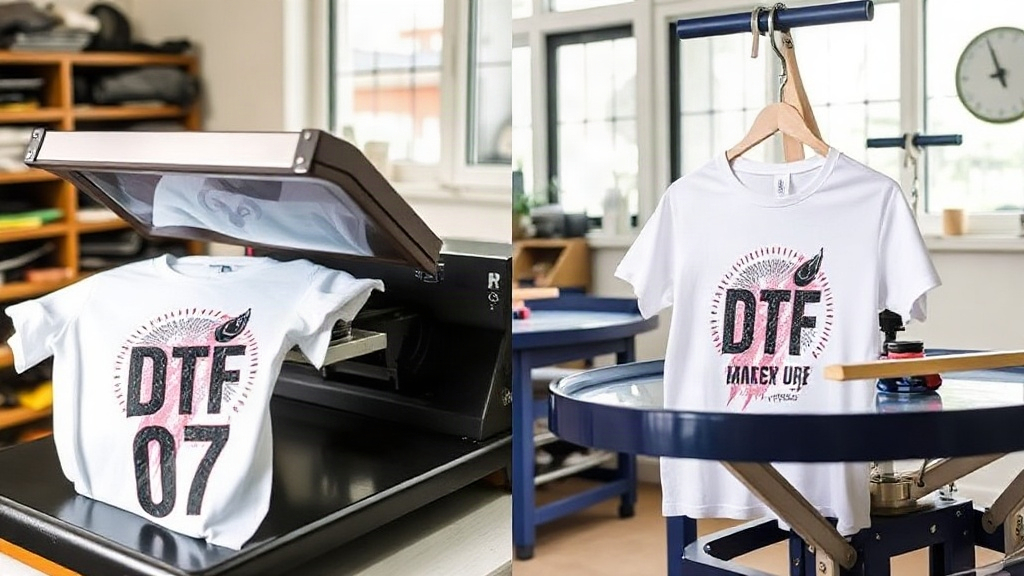
When you're printing custom t-shirts, the method you choose can make or break your business. Two popular options are DTF Transfers and screen printing. Both have loyal fans, but they serve different purposes. In this article, we'll break down the differences so you can decide which one fits your needs.
What Are DTF Transfers?
DTF Transfers (Direct to Film) are a relatively new digital printing technology. A design is printed onto a special film, coated with adhesive powder, and then heat-pressed onto the fabric. This method works on almost any material, including cotton, polyester, and blends. It's great for detailed, multi-color designs without setup fees.
What Is Screen Printing?
Screen printing is a traditional method where ink is pushed through a mesh screen onto the fabric. Each color requires a separate screen, so setup costs are higher. However, once set up, screen printing is very cost-effective for large orders. It's known for its durability and vibrant colors on cotton fabrics.
Cost Comparison: Which Is Cheaper?
For small batches, DTF Transfers win. There are no setup fees, so you can print one shirt or fifty at a similar per-unit cost. Screen printing, on the other hand, has a high setup cost per color. For example, a 3-color design on 50 shirts might cost $2 per shirt in setup alone. But for 500 shirts, screen printing becomes much cheaper per unit. So if you're doing large runs, screen printing saves money; for small or one-off orders, DTF is more economical.
Quality and Durability
Both methods produce long-lasting prints if done correctly. Screen printing embeds ink into the fabric, so it can stretch with the garment. DTF transfers sit on top of the fabric but are flexible and don't crack easily. However, DTF prints may feel slightly thicker. In terms of detail, DTF excels at intricate designs with gradients and fine lines, while screen printing is better for bold, solid colors.
Fabric Compatibility
Screen printing works best on cotton and cotton blends. It can be tricky on polyester because the ink may not adhere well. DTF transfers, however, bond to almost any fabric, including polyester, nylon, and leather. This makes DTF a go-to for printing on performance wear and dark garments.
Workflow and Turnaround Time
Screen printing requires preparing screens, mixing inks, and cleaning up, which takes time. DTF transfers are printed digitally and can be pressed in minutes. For rush orders, DTF is faster. Plus, you can print and press on demand, reducing inventory waste.
When to Choose DTF Transfers
- Small orders or one-off custom pieces
- Designs with many colors or photographic details
- Printing on polyester, blends, or unusual fabrics
- Fast turnaround needed
When to Choose Screen Printing
- Large orders (100+ pieces) of the same design
- Simple designs with few colors
- Cotton or cotton-blend garments
- Budget is a concern for bulk orders
Environmental Impact
Screen printing uses plastisol inks, which contain PVC and phthalates, and requires chemical cleanup. DTF transfers use water-based inks and no harsh chemicals. The film waste is a concern, but some suppliers offer biodegradable options. If eco-friendliness is a priority, DTF may be the better choice.
Conclusion
Both DTF Transfers and screen printing have their strengths. Your choice depends on order size, fabric, design complexity, and budget. Many shops use both: DTF for custom orders and screen printing for bulk. At DTF Print Go, we specialize in high-quality DTF transfers that bring your designs to life. Visit our site to learn more.
Frequently Asked Questions
Can I use DTF transfers on dark fabrics?
Yes, DTF transfers work great on dark fabrics. The white ink layer in the transfer ensures the colors pop, so you don't need a separate white underbase like with screen printing.
How long do DTF transfers last?
With proper application and care, DTF transfers can last as long as the garment. They withstand multiple washes without fading or cracking. Just avoid ironing directly on the print.
Is screen printing cheaper than DTF for 50 shirts?
For 50 shirts, DTF is usually cheaper because there are no setup fees. Screen printing would require you to pay for each color screen, which can add up quickly.
What fabrics can I use with DTF transfers?
DTF transfers adhere to cotton, polyester, blends, nylon, leather, and more. They are very versatile and can be used on both light and dark materials.